Things That Go Beep in the Night: Agentic AI Joins the Search for Extraterrestrial Signals
Original reporting by NVIDIA Blog
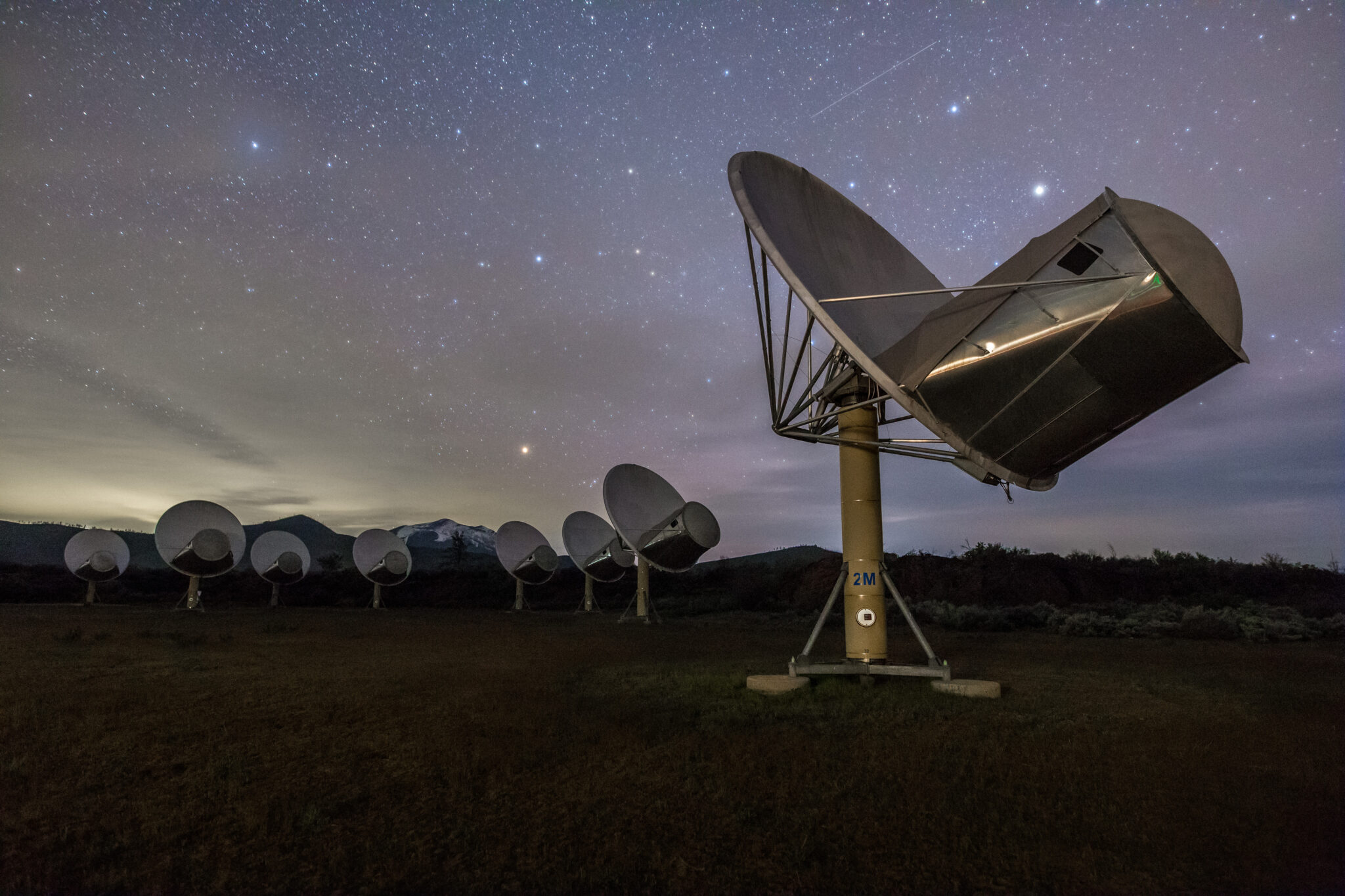
The search for extraterrestrial intelligence (SETI) is increasingly focused on the use of human-built AI agents listening for signals from potentially alien-built AI agents. While science fiction often imagines direct human-alien encounters, the scientific pursuit has taken a significant leap, recognizing that extraterrestrial civilizations, potentially billions of years older than humanity, may have developed technologies far beyond our own, including sophisticated forms of artificial intelligence. This paradigm shift acknowledges that if intelligent life exists elsewhere, its most discernible footprint might be its own advanced technology.
The AI advantage Pioneering this new frontier, organizations like Breakthrough Listen and the SETI Institute are now integrating agentic AI directly into the daily operations of observatories such as the Allen Telescope Array. This allows AI agents to autonomously steer instruments, enhance and correct terabits per second of incoming sensor data, and apply complex AI models in real time—all often initiated by simple natural language requests. Powered by platforms like NVIDIA Holoscan, this transformative capability enables faster, more adaptable searches for faint signals that would overwhelm traditional methods. As Andrew Siemion of the SETI Institute highlights, this evolution means "what they find may have much more in common with themselves than with the humans who created them," reframing the challenge as a breakthrough in "translation." This approach has already proven its mettle, achieving the first real-time AI detection of a pulsar, demonstrating the profound potential of AI to accelerate humanity's cosmic quest.
The integration of agentic AI into the search for extraterrestrial intelligence marks a profound turning point, moving SETI from a human-centric endeavor to a sophisticated collaboration between human ingenuity and artificial cognition. This technological leap, powered by platforms like NVIDIA Holoscan and advanced signal processing frameworks, dramatically accelerates the analysis of vast astronomical data, making real-time detection of complex phenomena, like pulsars, a tangible reality. The vision of autonomous AI agents steering telescopes, correcting errors, and identifying signals offers unprecedented efficiency, compressing years of human effort into mere hours.
The Evolving Search
This evolution transcends mere operational improvements; it fundamentally reshapes the very nature of the search itself. By deploying AI to listen for what could be alien AI, humanity acknowledges the potential universality of advanced artificial intelligence as a signature of cosmic civilizations. This “breakthrough in translation,” as Andrew Siemion posits, suggests that the most discernible echoes across the cosmos might not be direct biological signals, but the technosignatures of non-human intelligences. Looking ahead, this trajectory promises an exponentially faster exploration of the universe, potentially uncovering patterns and signals that human observers alone might miss. It paves the way for truly autonomous observatories, perhaps on the lunar far side, continuously scanning the heavens for signs of intelligence that might mirror—or profoundly challenge—our own understanding of consciousness and technology.
Frequently asked questions
- How is artificial intelligence transforming the search for extraterrestrial intelligence today?
- AI agents are revolutionizing the search for extraterrestrial intelligence by automating and accelerating data processing. At observatories like the Allen Telescope Array, these agents can steer instruments, correct incoming data, and apply complex models in real-time. This significantly speeds up the analysis of vast radio telescope data streams, identifying potential signals much faster than human-led efforts. The focus increasingly includes listening for potential signals from alien AI agents.
- What are the key benefits of using AI for processing cosmic data in SETI?
- AI enhances the processing of cosmic data by handling enormous volumes of information at unprecedented speeds. It enables real-time analysis of terabits per second of sensor data, preventing the need for extensive storage and post-processing. Agentic AI can detect and correct data errors, steer telescopes, and identify significant signals, like pulsars, in hours rather than the weeks or years human teams would require, making the search more efficient and adaptable.
- What is agentic AI and how does it assist in the search for alien signals?
- Agentic AI refers to intelligent systems capable of autonomous decision-making and execution, often in response to natural language requests. In SETI, these agents can orchestrate observatory operations, from steering radio telescopes and calibrating instruments to processing massive data streams in real-time. They act as a "harness" for the instruments, interpreting and acting on sensor data to identify potential extraterrestrial signals with remarkable speed and accuracy, accelerating discovery.