Reduce Memory Redesigns With Shift-Left
Original reporting by Semiconductor Engineering
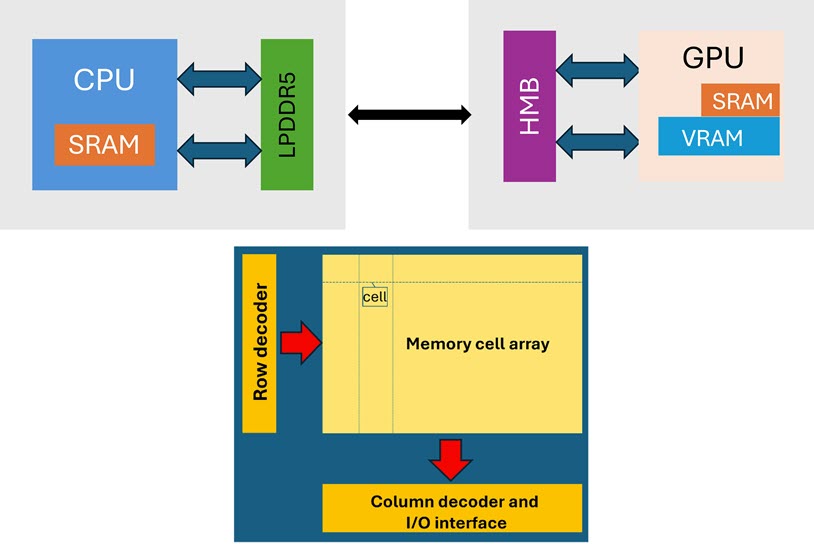
For engineering managers overseeing memory design, a deeply frustrating pattern has long persisted: a promising architecture sails smoothly through schematic capture and into layout, only to crash during integration testing. Subtle schematic errors—like address decoders enabling multiple banks simultaneously or power switches creating rail conflicts under specific state combinations—suddenly surface as catastrophic contention issues. By this late stage, design constraints have hardened, schedules have compressed, and the cost of redesign has multiplied, often leading to painful choices between degraded performance, safety risks, or immense rework. This reactive approach, while historically common, is rapidly breaking down. Modern memory architectures, from high-bandwidth stacks to complex multi-domain SRAM arrays, introduce dense interconnections and shared controls where these latent schematic errors can manifest as devastating system failures.
A strategic shift Recognizing this untenable situation, leading organizations are now enacting a transformative shift. They are moving contention analysis "left" in the design flow, embedding it directly into the schematic stage. This proactive methodology allows engineers to detect and resolve potential conflicts when design flexibility is at its peak and modification costs are negligible. Instead of waiting for top-level simulation or silicon bring-up to reveal issues, teams analyze transistor-level connectivity and logic errors much earlier. This strategic pivot promises to unlock predictable convergence on first-time-right silicon, drastically compressing development schedules, and avoiding the immense financial and time costs associated with late-stage iteration and design respins. It transforms risk detection from a late-stage validation checkpoint into an early design exploration activity.
The adoption of a shift-left methodology for contention analysis marks a pivotal evolution in memory subsystem design, transforming a reactive, late-stage problem-solving process into proactive risk management. By instilling systematic checking directly at the schematic stage, organizations effectively eliminate the costly and time-consuming rework loops endemic to traditional flows. This fundamental shift ensures higher predictability in design cycles, dramatically reduces non-recurring engineering expenses by avoiding costly respins, and significantly compresses development schedules, ultimately paving a more reliable path to first-time-right silicon for even the most intricate memory architectures. It’s a move from identifying problems to preventing them, building confidence and efficiency into the core of the design process.
A Strategic Imperative
The broader implications of this methodological transformation resonate across the entire landscape of advanced integrated circuit development. As system-on-chip (SoC) designs grow exponentially in complexity, integrating diverse IP blocks from AI accelerators to high-performance computing cores and autonomous driving platforms, the principles of early contention detection become non-negotiable. This proactive stance ensures not only functional reliability and robust performance but also unlocks the ability to push architectural boundaries with greater assurance. For engineering managers, it offers unparalleled control over project timelines and resource allocation. In an era where time-to-market and first-pass success are paramount, shift-left contention analysis transitions from a beneficial practice to an indispensable strategic capability, foundational for fostering innovation and securing a competitive edge in the rapidly evolving world of semiconductor technology.
Frequently asked questions
- What is shift-left contention analysis in memory design?
- Shift-left contention analysis is a proactive methodology in memory design that moves the detection of potential conflicts from late stages, like integration testing or silicon bring-up, to much earlier phases, specifically the schematic design stage. This involves analyzing transistor-level connectivity and logic errors, such as address decoders enabling multiple banks or power switches creating rail conflicts, when design flexibility is highest. It aims to identify and resolve issues before they become costly problems.
- Why is it important to perform contention analysis early in memory design?
- Performing contention analysis early is crucial because modern memory architectures are highly complex, with dense interconnections where subtle schematic errors can lead to catastrophic system failures. Detecting these issues late in the design flow, such as during integration testing, results in immense rework costs, schedule delays, and potential performance degradation. Early detection allows for resolution when modifications are negligible, preventing costly respins and ensuring reliability.
- What are the key benefits of shifting contention analysis left in the design flow?
- Shifting contention analysis left offers significant benefits, including predictable convergence on first-time-right silicon and drastically compressed development schedules. It reduces non-recurring engineering expenses by avoiding costly late-stage rework and design respins. This proactive approach transforms risk detection into an early design exploration activity, enhancing functional reliability, robust performance, and overall project control, which is vital for competitive advantage in semiconductor technology.