Orbital Data Centers Are Souped-Up Satellites – For Now
Original reporting by Semiconductor Engineering
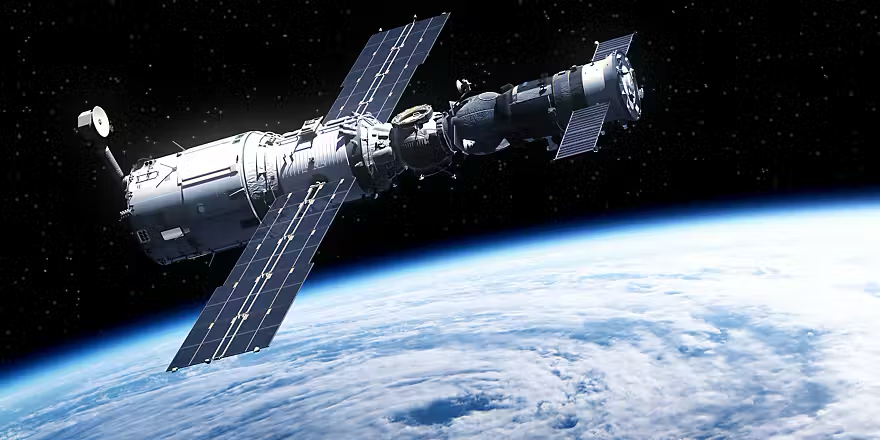
The insatiable demand for AI compute, coupled with terrestrial limitations on power, water, and physical space, is compelling the tech industry to look beyond Earth's surface for new solutions. The vision: "data centers in space," a concept rapidly gaining traction among giants like SpaceX and Blue Origin, who foresee vast constellations of orbital compute power handling the next generation of AI workloads. However, experts clarify that these aren't traditional data centers, but rather sophisticated "compute centers" attached to satellites, designed to process data closer to its source. The appeal is clear: potentially unlimited solar energy and the vacuum of space for heat dissipation, offering an escape from Earth's infrastructure and regulatory burdens.
The Space Frontier This celestial ambition, while promising, faces significant technical and economic hurdles. Reliable power often demands sun-synchronous orbits over Earth's poles, a region where sensitive electronics are highly vulnerable to intensified radiation from the weaker magnetic field. This environment exacts a heavy toll on advanced chip architectures and memory, necessitating costly radiation hardening and redundant systems to guard against single-event upsets. Beyond radiation, challenges include effective heat dissipation, maintaining robust wireless data transmission, and managing the prohibitive costs of in-orbit maintenance. While existing orbital compute aids in local data processing, the widespread deployment of massive AI training and inference centers in space remains a complex and expensive undertaking, though some predict substantial progress within the next five years.
While the full realization of truly analogous "data centers in space" remains a futuristic vision, the trajectory toward orbital compute centers is undeniable. The ambition to leverage space for AI processing is fueled by the growing demand for compute and the escalating costs and limitations of terrestrial infrastructure—from energy and water scarcity to regulatory hurdles and NIMBYism. However, this nascent frontier is fraught with formidable engineering and economic challenges, including extreme radiation environments, complex thermal management, the intricacies of consistent power generation in orbit, and the prohibitive costs of launch and long-term maintenance in a zero-gravity, unserviceable environment. The vulnerability of advanced node memories to radiation, particularly at the poles, necessitates costly triple redundancy, a prime example of the unique compromises required.
The Orbital Imperative
Despite these hurdles, the strategic momentum from industry giants points to a significant shift in AI infrastructure. Companies like SpaceX are not merely augmenting existing satellite capabilities; they are laying the groundwork for an entirely new paradigm of distributed AI. This movement promises to unlock unprecedented computational scale, potentially achieving gigawatt-level processing power to meet the relentless demands of next-generation AI models, even if it introduces new challenges like space debris and astronomical interference. The implications extend beyond merely offloading terrestrial burdens; they envision a future where real-time, high-latency AI inference and even training can occur at the very edge of space, transforming industries from defense and Earth observation to global communication and scientific discovery. While cost-effectiveness and reliability remain critical barriers to mainstream adoption in the immediate term, the "fail fast, learn fast" ethos prevalent in commercial space, coupled with rapid technological innovation, suggests a near future where substantial AI compute resides off-planet. This evolution will not only reshape our approach to data processing but also introduce new considerations for space traffic management, spectrum allocation, and the geopolitical landscape of digital infrastructure, marking the dawn of the "Tera" era of orbital computing.