Into the Omniverse: Three Workflows for Improving Vision AI Agent Accuracy With Synthetic Data and Fine-Tuning
Original reporting by NVIDIA Blog
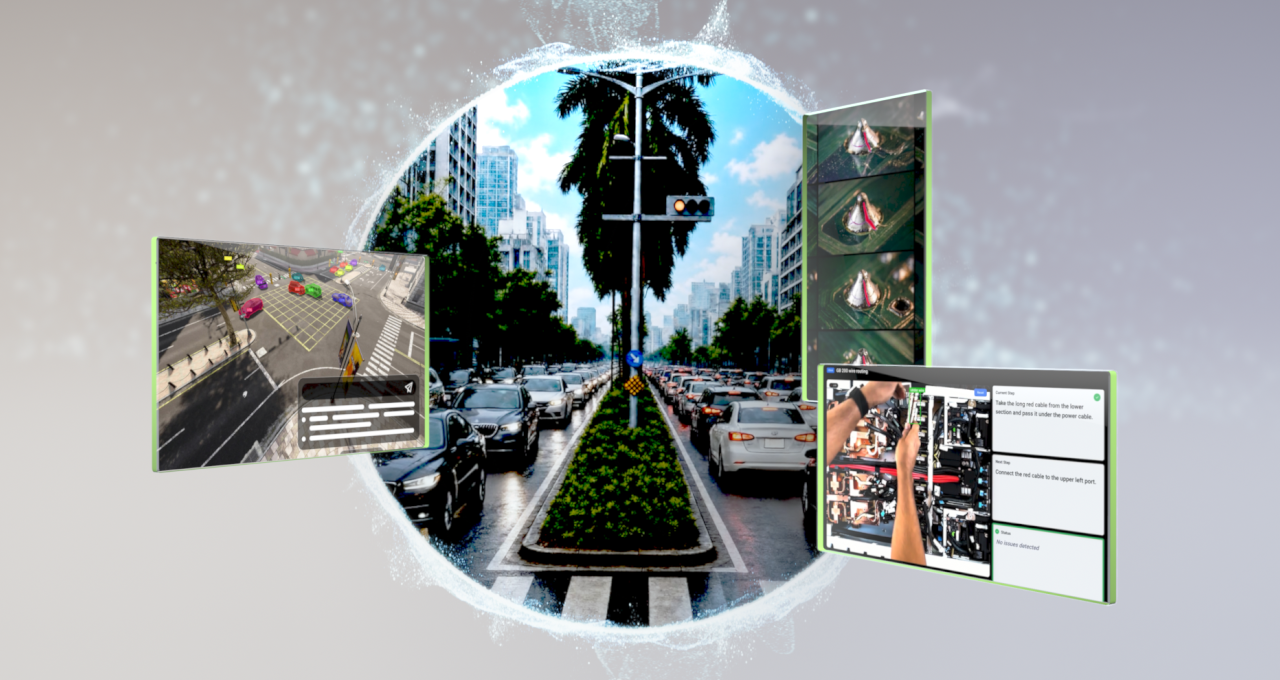
Vision AI agents refer to advanced AI systems that automatically process video data from the physical world to generate operational intelligence. These agents are quickly becoming indispensable for converting raw video streams from factories, smart cities, and transportation systems into actionable insights, particularly as a growing volume of AI workloads migrate to the network edge. Despite the promise of real-time intelligence, a staggering 90% of existing edge data often goes unprocessed, representing a vast untapped resource. Developing robust vision AI agents that can accurately interpret complex real-world conditions, adapt to constant changes, and seamlessly connect insights to operational workflows presents significant challenges, from acquiring sufficient training data for rare events to fine-tuning models and assembling intricate deployment pipelines.
A Comprehensive Approach NVIDIA is tackling these hurdles with a full-lifecycle approach, integrating NVIDIA Metropolis agent skills and blueprints with the OpenUSD framework and NVIDIA Omniverse. This powerful combination equips developers with reusable workflows and foundational tools for generating high-quality synthetic training data, efficiently fine-tuning AI models, and streamlining the deployment of sophisticated vision AI applications across diverse environments. Practical applications demonstrate this impact: from accelerating manufacturing inspection accuracy with synthetic defect generation for rare issues, to enhancing smart city incident response times with intelligent video reasoning, and boosting industrial operational efficiency through precise standard operating procedure verification. This integrated strategy aims to make the development and deployment of autonomous vision agents more accessible, efficient, and scalable.
The examples across manufacturing, smart cities, and industrial operations unequivocally demonstrate that the era of practical, deployable vision AI agents has arrived. By meticulously addressing critical bottlenecks—from data scarcity and model fine-tuning complexities to fragmented workflow assembly—NVIDIA's comprehensive ecosystem, leveraging OpenUSD, Omniverse, Metropolis, and specialized agent skills, is fundamentally streamlining the development and deployment of these sophisticated systems. This integrated approach ensures organizations can effectively bridge the gap between raw video data and genuine operational intelligence, transforming insights into proactive action directly at the edge where it matters most.
Towards Pervasive Autonomy The broader implications of this technological maturation are profound. We are rapidly moving towards an operational landscape where AI agents don't merely detect anomalies but actively reason, adapt, and drive autonomous actions in real-time, often in environments previously inaccessible to complex AI. This foundational shift promises unprecedented levels of efficiency, safety, and productivity across virtually every sector. Factories will operate with heightened precision and minimal human intervention, cities will manage resources and respond to emergencies with unmatched speed, and industrial processes will dynamically optimize themselves. The ability to rapidly generate synthetic data, iteratively fine-tune models, and deploy sophisticated AI across countless diverse edge devices represents a significant leap. This evolution will not only reshape existing industries by automating and enhancing core functions but also catalyze the creation of entirely new services and operational paradigms, driven by an ever-smarter, more responsive physical world.
Frequently asked questions
- What are vision AI agents and where are they commonly applied in industries?
- Vision AI agents are intelligent systems that automatically process video data from physical environments to generate operational intelligence. They are increasingly deployed at the "edge"—near cameras and sensors—in factories, smart cities, warehouses, and transportation systems. These agents help automate tasks like quality inspection, traffic management, and monitoring operational procedures, transforming raw video into actionable insights for improved efficiency and safety across various industrial settings.
- Why is it challenging to develop and deploy effective vision AI agents at scale?
- Developing effective vision AI agents faces several hurdles. Accuracy often plateaus due to gaps in training data, especially for rare events or new defects. Many organizations also lack the specialized expertise needed for fine-tuning AI models quickly across diverse sites and conditions. Furthermore, assembling and customizing complex agent workflows, which involve integrating video pipelines, models, and alerts, can be time-consuming and demand significant technical knowledge to deploy at scale.
- How do OpenUSD and NVIDIA tools streamline the creation of vision AI agents?
- OpenUSD provides a universal framework for describing and reusing 3D worlds, which is crucial for creating realistic simulation environments. NVIDIA Omniverse, built on OpenUSD, facilitates synthetic data generation and digital twin workflows, helping expand training scenarios for AI models. NVIDIA Metropolis skills and blueprints offer reusable workflows for generating data, fine-tuning models, and deploying agentic video applications across edge and cloud environments, significantly accelerating the entire development and optimization lifecycle for vision AI agents.