Industrial Software Leaders Build Secure, Autonomous AI Engineers With NVIDIA NemoClaw
Original reporting by NVIDIA Blog
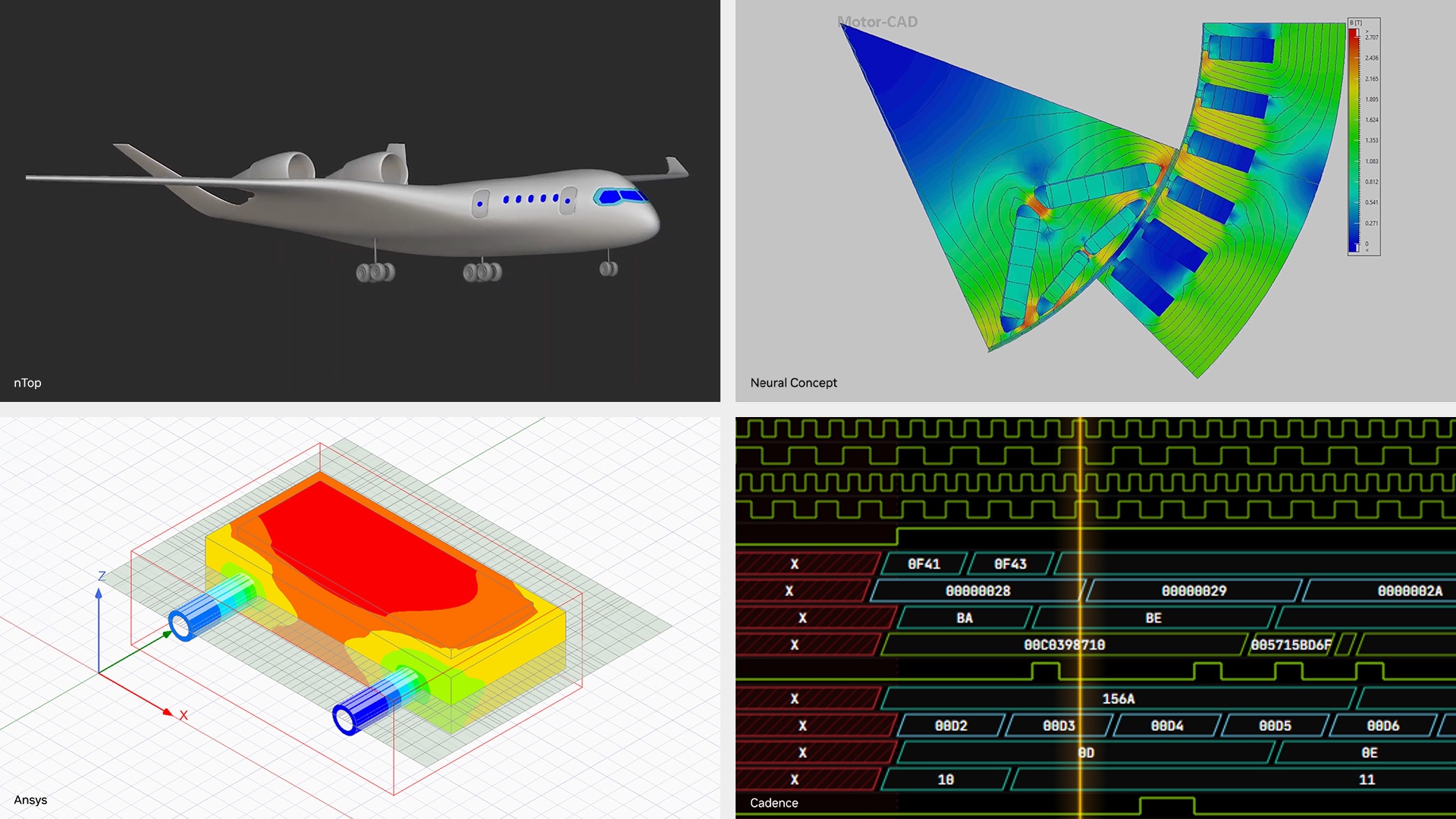
Accelerated computing has dramatically compressed simulation times in industrial engineering from weeks to mere hours. Yet, the broader end-to-end workflow—encompassing computer-aided design, meshing, setup, debugging, and post-processing—has remained a significant bottleneck. This week at GTC Taipei at COMPUTEX, NVIDIA and over a dozen engineering software providers are unveiling a transformative solution: autonomous AI agents designed to automate these complex processes entirely.
These "AI engineers" are built upon NVIDIA NemoClaw, an open blueprint for creating specialized, long-running agents with a secure runtime, powered by frontier models and customizable through NVIDIA NeMo libraries. Integrated with robust orchestration frameworks, NemoClaw and its core runtime, NVIDIA OpenShell, ensure secure and efficient operation, deployable from personal AI supercomputers to enterprise data centers.
Industry adopts agents
Across automotive, aerospace, semiconductors, and manufacturing, leading firms are embracing this paradigm shift. Cadence is using NemoClaw to cut register-transfer level (RTL) verification from weeks to hours, while Dassault Systèmes is productizing its 3DEXPERIENCE Agentic Platform for design and manufacturing operations. Siemens and Synopsys are deploying agents for intricate semiconductor and GPU cooling designs. Beyond industry giants, innovative startups like Flexcompute and PhysicsX are also leveraging NemoClaw to explore thousands of design variants overnight and automate weeks of thermal simulation, demonstrating a profound acceleration of innovation across the engineering landscape.
The demonstrations at GTC Taipei confirm a pivotal shift in industrial engineering, extending the transformative power of accelerated computing beyond raw simulation speed to encompass the entire end-to-end workflow. By deploying autonomous AI agents built on NVIDIA NemoClaw, industry leaders and innovative startups are fundamentally reimagining design, simulation, and manufacturing processes. These "AI engineers" are automating complex, multi-tool workflows, drastically reducing timelines from weeks to hours for critical tasks like RTL verification, thermal optimization, and multiphysics design. This automation frees human engineers from repetitive, tedious work, allowing them to focus on higher-level problem-solving, creative exploration, and strategic innovation.