How AI Is Helping Care Teams Get Patients the Right Care, Sooner
Original reporting by NVIDIA Blog
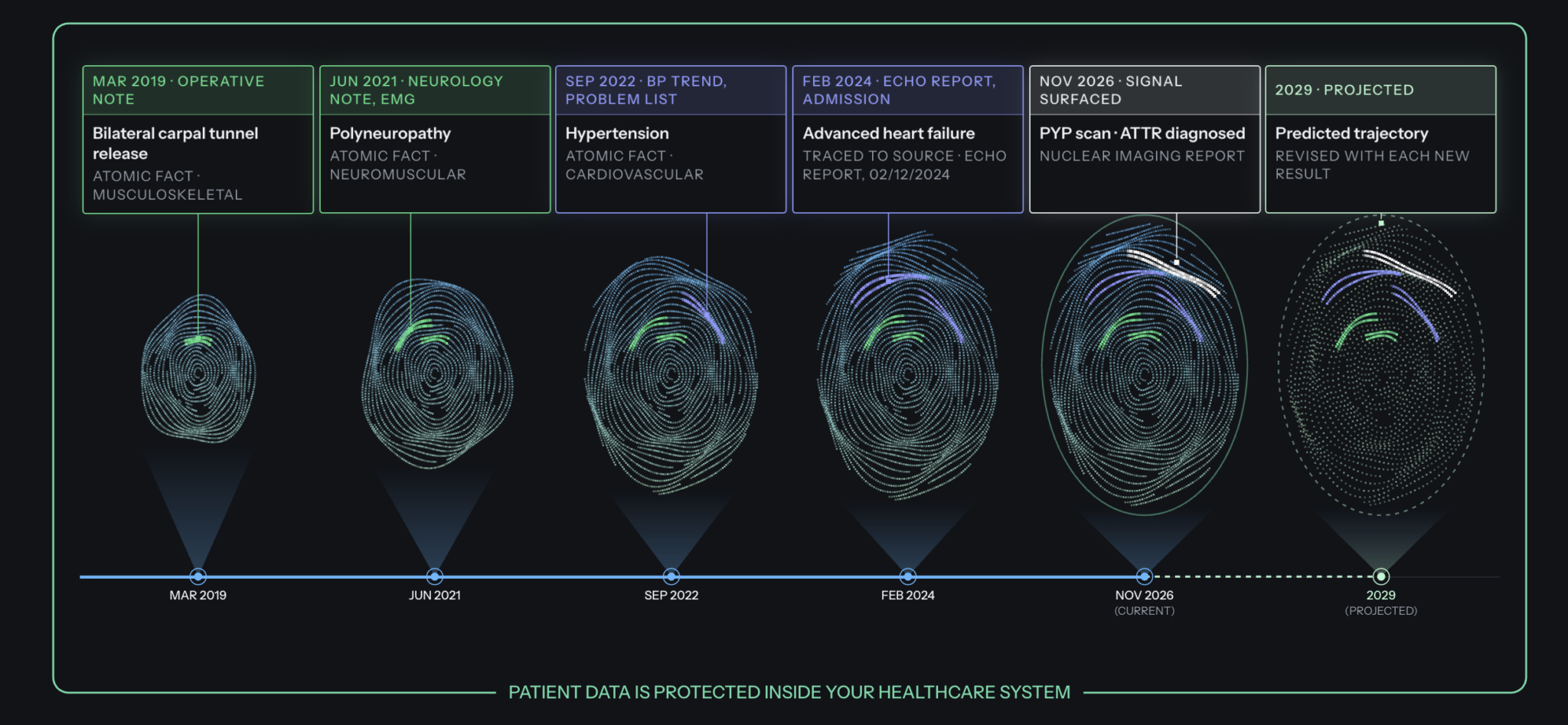
Dyania Health's Synapsis AI is a clinical reasoning engine that leverages artificial intelligence to rapidly analyze vast troves of unstructured patient data within hospital systems, transforming decades of medical records into actionable clinical insights. Clinicians have long faced the daunting task of manually sifting through years of free-text notes, operative reports, and imaging reads to piece together a patient’s full story. Synapsis AI automates this laborious process, working across every entry in a patient’s record to connect disparate findings and answer complex clinical questions, effectively mirroring the deductive reasoning of a specialist. This shift allows care teams to dramatically reduce time spent on chart review, redirecting precious hours to direct patient care, while retaining full clinical oversight by reviewing the AI's evidence-based outputs. Importantly, the system runs on NVIDIA-accelerated computing securely within a health system’s own firewall, ensuring patient data remains private and within hospital walls.
Real-world impact
The transformative potential of Synapsis AI was recently highlighted at Cleveland Clinic, where it supported a study involving over 7,800 aortic valve replacement patients. The AI platform efficiently processed years of patient data, including countless echocardiograms, to build a predictive model for valve deterioration and reintervention risk—a monumental chart review task that would have taken clinicians years to complete manually. This capability underscores how AI can accelerate research, personalize treatment strategies, and enhance patient outcomes by unlocking the full diagnostic power hidden within medical records.
Dyania Health's Synapsis AI, powerfully demonstrated in its application at Cleveland Clinic, stands as a clear example of AI's transformative potential in healthcare. By converting decades of unstructured patient data—from physician notes to imaging reports—into actionable clinical insights with speed and precision, the technology not only augments clinicians’ ability to predict outcomes like valve deterioration but also significantly reduces the considerable burden of manual chart review. This critical efficiency frees medical professionals to dedicate more time to direct patient care and complex decision-making, firmly establishing AI as an indispensable assistive tool. Furthermore, the commitment to on-premise processing within existing health system firewalls addresses paramount data privacy concerns, a crucial factor accelerating broader, responsible AI adoption in sensitive medical environments globally.
The Broader Horizon
The implications of such advancements extend well beyond specialized surgical follow-ups, signaling a profound shift in clinical practice and research. This paradigm of secure, AI-driven data analysis lays the groundwork for a future where intelligent systems routinely identify patients eligible for life-saving clinical trials, proactively close critical care gaps in chronic disease management, and streamline the populating of vital clinical registries with unprecedented accuracy and completeness. As AI continues to evolve, its seamless integration promises to unlock novel diagnostic capabilities, accelerate the development of personalized treatment pathways, and foster a more efficient, equitable, and patient-centric healthcare ecosystem worldwide. This collaborative model—where AI efficiently processes vast datasets and human clinicians provide the ultimate judgment, empathy, and strategic oversight—marks a critical step towards maximizing both technological innovation and human expertise, ultimately elevating the standard and accessibility of care for all.
Frequently asked questions
- How does AI technology help healthcare teams analyze vast amounts of patient medical records?
- AI systems like Synapsis AI process decades of patient history, including free-text clinician notes, imaging reports, and lab results. They connect disparate findings across years to build a comprehensive patient narrative. This enables care teams to quickly understand a patient's full story, identify critical clinical signals, and support faster, more informed decision-making. AI acts as an assistive tool, surfacing evidence for clinicians to review.
- How do hospitals ensure patient data privacy when using AI systems for record analysis?
- To maintain patient data privacy, AI systems are often designed to operate within a health system's existing firewall. This means the entire processing of sensitive patient records occurs onsite, inside the hospital's secure network. Data is not shared externally or transferred off-premises. Clinicians maintain control, reviewing all AI-generated outputs, ensuring that patient information remains protected and within regulated boundaries.
- What are practical applications of AI in clinical settings for improving patient care?
- AI in healthcare has diverse practical applications, significantly enhancing patient care. It helps identify patients eligible for clinical trials by quickly analyzing complex criteria within records. AI can predict risks like disease progression, as demonstrated by predicting valve deterioration in cardiac patients. It also assists in closing care gaps, supporting radiologists, and streamlining routine tasks, allowing clinicians to dedicate more time to direct patient interaction and complex decision-making.