Why Has California Led the Way on AI Regulation? (with Irene Liu)
Original reporting by EU AI Act Newsletter
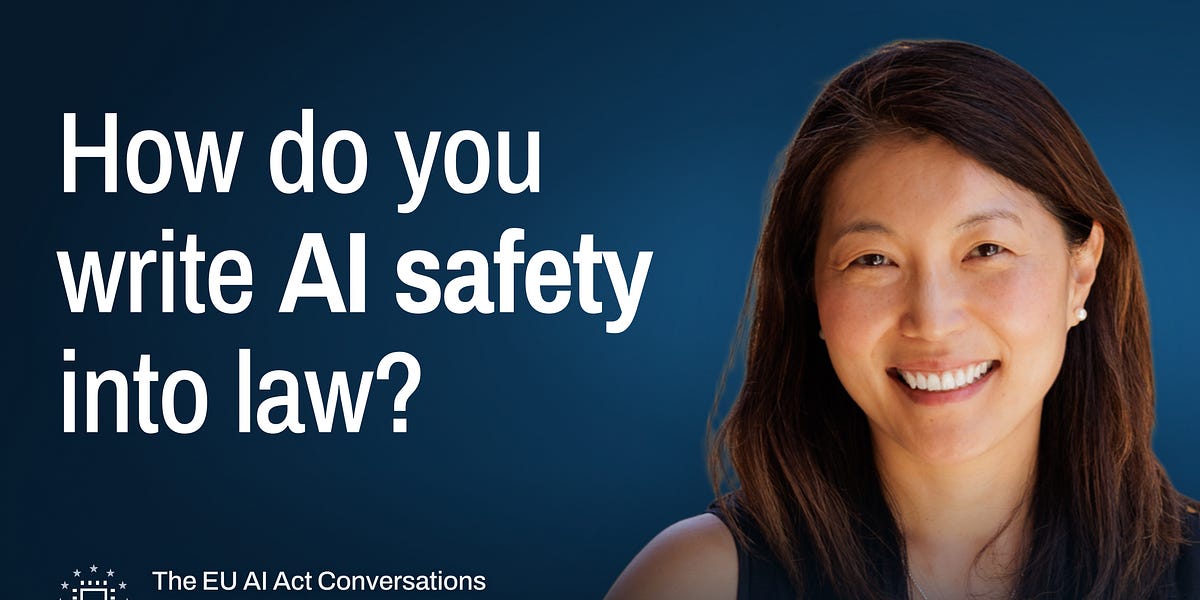
California leads the United States in its ambitious efforts to regulate frontier artificial intelligence, shaping national and international AI policy discussions. This article delves into the state’s pioneering journey through the insights of Irene Liu, former AI advisor to the California State Senate and now the founding executive director of the Stanford Law School AI Initiative. Drawing on her extensive background at the U.S. Department of Justice, the Federal Trade Commission, and as general counsel for tech startups, Liu offers an unparalleled perspective on why California has taken such a prominent role. The state's massive economy, concentration of AI talent, and historical inclination to "fill regulatory gaps" when federal action is absent—a precedent set by the California Consumer Privacy Act (CCPA)—have positioned it as a crucial testing ground for AI governance.
The Strategy Shift
The narrative traces California's legislative path, beginning with SB 1047, an ambitious and comprehensive frontier AI bill. Despite passing both legislative houses, it faced significant industry backlash and was ultimately vetoed by the Governor, highlighting the challenges of broad regulation in a rapidly evolving field. This pivotal moment led to a strategic reevaluation, culminating in the passage of SB 53. This successor bill adopted a narrower, more targeted scope, focusing on essential requirements like transparency reporting, the disclosure of critical safety incidents, and robust whistleblower protections for developers of frontier AI models. The discussion examines how these state-level initiatives create a "California effect" on wider American policy and offers a compelling comparison with the European Union's risk-based AI Act, exploring critical opportunities for transatlantic collaboration on AI safety.
California's proactive stance in regulating frontier AI, as evidenced by its journey from SB 1047 to the enacted SB 53, highlights its distinctive role as both a global innovation epicenter and a legislative pioneer. Driven by its vast economic power and a politically aligned state government, California consistently fills regulatory gaps where federal action lags, setting de facto national benchmarks, much like its influential privacy laws. This "California effect" means the state's efforts in AI governance—spanning transparency, incident reporting, and whistleblower protection—are not merely local endeavors, but crucial proving grounds that could shape broader American policy, despite intense industry lobbying and the challenges of the legislative process.
Shaping Future Governance The iterative development of California's AI legislation, learning from vetoes and refining approaches, mirrors the broader global challenge of adapting policy to rapidly advancing technology. While the EU AI Act presents a singular, comprehensive framework for twenty-seven member states, the American approach is coalescing through a more fragmented, state-led mosaic. This landscape, with California at its vanguard, offers diverse models for addressing AI risks, but also raises questions about potential regulatory fragmentation. The path California forges will undoubtedly inform discussions on a federal level, influencing how the United States ultimately harmonizes its approach. Moreover, these developments are integral to the transatlantic dialogue, emphasizing the shared imperative to develop robust, responsible, and globally interoperable AI safety standards, ensuring that AI's transformative power is harnessed ethically and securely for all.
Frequently asked questions
- Why has California become a prominent leader in developing artificial intelligence regulations in the US?
- California is the fourth-largest global economy and a major AI industry hub. Its legislature often fills regulatory gaps when the federal government is inactive, as seen with privacy laws. Strong political alignment among its state executive and legislative branches also facilitates the passage of new bills, contributing to its leading role in AI governance. This dynamic allows for quicker legislative action on emerging technologies like AI.
- What are the key provisions of California's recently passed Senate Bill 53 concerning frontier AI safety?
- California SB 53 mandates transparency reporting for frontier AI models, often through safety or system cards. It also requires developers to report critical safety incidents involving these advanced models and includes provisions to protect whistleblowers who report concerns. This bill represents a refined approach to earlier legislative attempts, aiming for increased accountability and safety in advanced AI development and deployment within the state.
- How do California's AI regulatory initiatives differ from the European Union's comprehensive AI Act?
- California's AI initiatives, such as SB 53, tend to be state-level efforts focusing on specific aspects like frontier AI model safety, often emerging due to a lack of federal US legislation. In contrast, the EU AI Act provides a comprehensive, union-wide, risk-based framework that classifies AI systems by their potential harm across various sectors and applies uniformly across all 27 member states, aiming for broader regulatory harmonization.