The Justice Department Wants To Give Patent Trolls More Power
Original reporting by Electronic Frontier Foundation
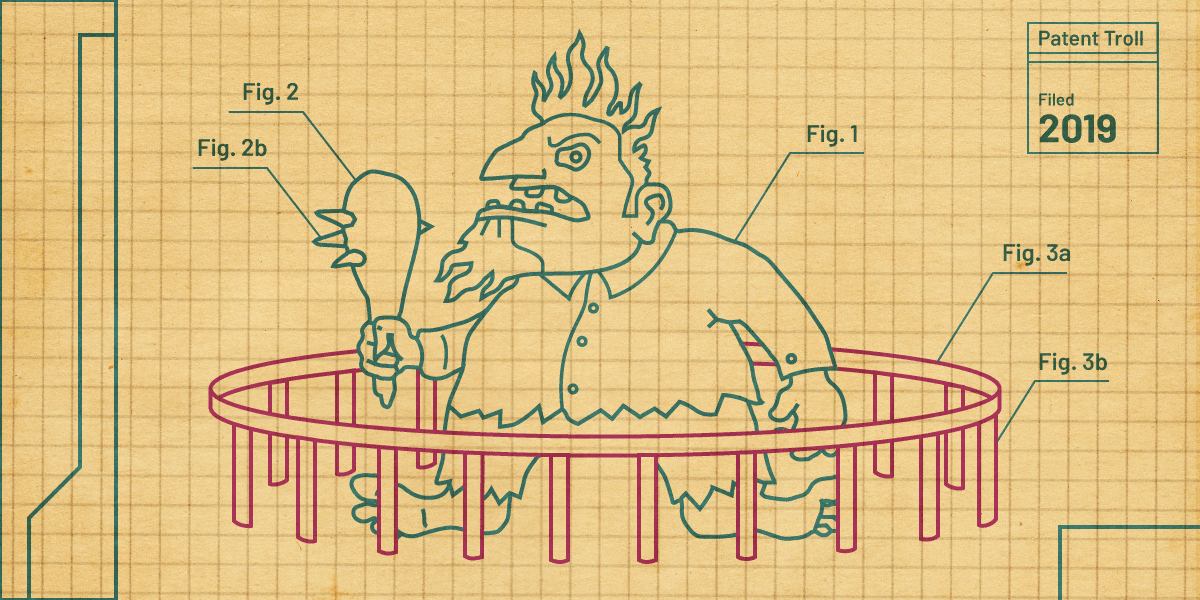
Patent trolls are entities that acquire patents primarily to extract payments through litigation and legal threats, rather than to produce goods or services. These companies frequently exploit vague software patents, not to protect innovation, but to threaten entire product lines and demand exorbitant settlements far exceeding a patent’s true worth. Their most potent weapon is often the injunction—a judicial order that can force companies to stop selling products or remove features from them, rather than simply paying monetary damages. This immense leverage allows them to extract payments based on the threat of disruption, not the patent's actual value.
Weakening Key Protections A critical safeguard against this abuse was established in 2006 by the Supreme Court’s *eBay v. MercExchange* decision, which significantly raised the bar for granting injunctions. This landmark ruling required patent holders to prove irreparable harm, balance hardships, and consider the public interest before a product could be shut down, preventing many abusive tactics. Yet, two decades later, the current administration is actively working to dismantle these protections. The Justice Department and the U.S. Patent and Trademark Office have repeatedly intervened in private patent disputes, urging courts to reinterpret the *eBay* standards. Their arguments, which include asserting that mere difficulty in calculating damages constitutes "irreparable harm," could make injunctions far easier to obtain, thus reviving the potent leverage of patent trolls and threatening innovators, free expression, and public access to crucial technologies.
The government's repeated interventions in cases like *Radian Memory Systems v. Samsung* and *Collision Communications v. Samsung* signal a concerning shift away from the protections established by *eBay v. MercExchange*. By advocating for an interpretation that simplifies the path to injunctive relief for patent owners, particularly those who do not produce goods but primarily license patents, the current administration risks dismantling a crucial safeguard against predatory patent litigation. This approach effectively prioritizes the negotiating leverage of patent assertion entities over the public interest, potentially allowing difficult-to-calculate monetary damages to become a pretext for injunctions that can halt product sales entirely, even when millions of users depend on that technology.
Impact on Innovation
This policy reversal carries significant ramifications beyond individual court cases. Weakening the *eBay* standard empowers patent trolls, making it easier for them to threaten established companies with product shutdowns rather than just seek fair compensation. Such an environment diverts resources from genuine research and development into costly legal defense and inflated settlements, stifling the very innovation patents are designed to promote. The broader implications extend to consumers, who could face higher prices, reduced product availability, and a chilling effect on technological progress across vital sectors like telecommunications and computing. Preserving the *eBay* protections is therefore not merely a legal technicality; it is essential for maintaining a competitive innovation landscape, ensuring public access to critical technologies, and upholding the fundamental principle that patents serve the public good, not merely the enrichment of litigation-focused entities.
Frequently asked questions
- What are patent trolls and why are they considered problematic in the tech industry?
- Patent trolls are entities that acquire patents primarily to sue other companies for infringement, rather than to develop products themselves. They often leverage legal threats and seek injunctions, which can force companies to stop selling products. This practice can extract exorbitant settlements that reflect the threat of a shutdown rather than the true value of the patent, hindering innovation and potentially limiting public access to essential technologies.
- How did the Supreme Court's eBay v. MercExchange decision impact patent injunctions?
- In 2006, the Supreme Court's eBay v. MercExchange decision made it more difficult for patent owners to obtain automatic permanent injunctions. It mandated that plaintiffs in patent cases meet the same stringent criteria as in non-patent cases. This includes demonstrating irreparable harm that cannot be compensated by money, a favorable balance of hardships, and that an injunction would not harm the public interest, thereby reducing patent trolls' leverage.
- Why is the U.S. government advocating for easier patent injunctions in recent cases?
- The U.S. government is intervening in patent cases, arguing that patent owners, including pure licensing entities, should find it easier to obtain injunctions. Their arguments center on the idea that difficulty in calculating monetary damages can constitute irreparable harm, and that the threat of an injunction encourages settlement. Critics argue this approach could weaken existing safeguards, granting undue leverage to patent holders and potentially stifling innovation and public access to technology by threatening product shutdowns.