How the AI Act Was Negotiated and What Comes Next (with Brando Benifei)
Original reporting by EU AI Act Newsletter
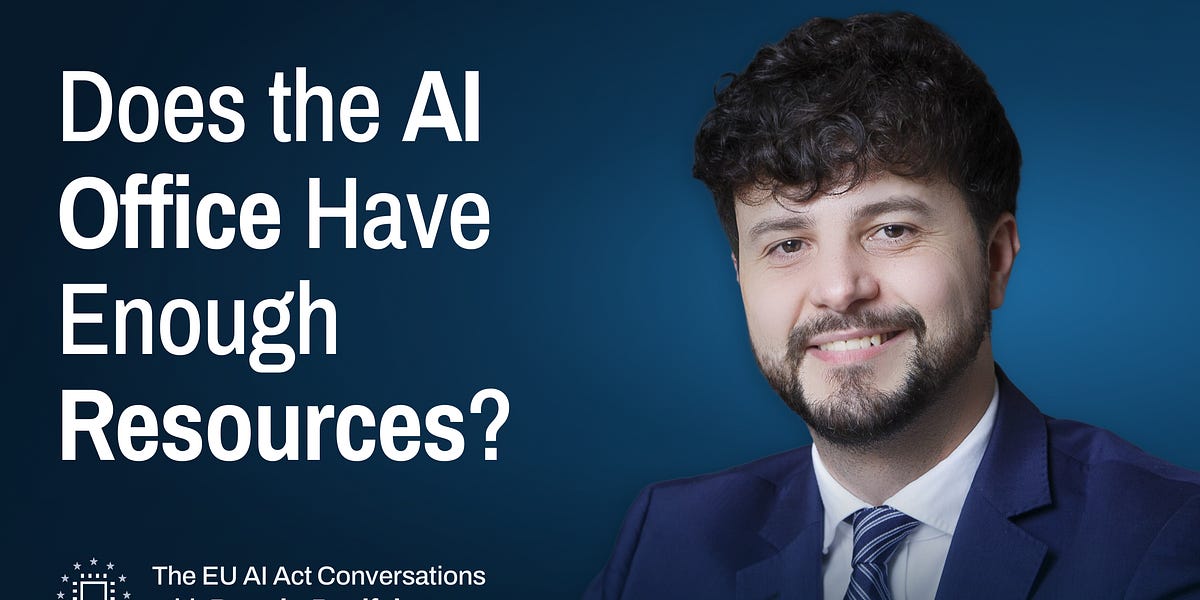
The EU AI Act refers to a landmark piece of legislation designed to regulate artificial intelligence systems within the European Union, aiming to ensure their safety, uphold fundamental rights, and foster responsible innovation. Brando Benifei, one of the European Parliament’s lead negotiators for the Act, offers an invaluable insider’s perspective on the critical transition from legislative drafting to practical implementation. As the EU AI Office recently gained full enforcement powers over general-purpose AI (GPAI) models, the discussion with AI expert Risto Uuk unpacks the profound challenges of putting this ambitious law into effect.
The Enforcement Imperative
Benifei addresses pressing questions regarding the efficacy of oversight for powerful GPAI models and whether the nascent AI Office possesses sufficient resources and technical expertise to address rapidly evolving real-world risks and incidents, which are now manifesting with increasing speed. He highlights recent revisions to the Act, including new prohibitions on harmful content, underscoring the dynamic nature of AI governance. Crucially, Benifei confronts the significant impact of fragmented national implementation on European innovation, arguing it presents a greater hindrance than the regulation itself. Emphasizing the necessity of robust enforcement and the active participation of independent research and civil society, he asserts that the EU’s early, proactive legislative stance, conceived well before the generative AI boom, is proving prescient. The credibility of the EU’s global leadership in AI governance now hinges on its ability to translate comprehensive legal texts into effective, unified action, countering narratives that seek to downplay the urgency of regulation.
The European Union's AI Act has transitioned from a legislative endeavor to a critical phase of implementation, marking a significant moment in global AI governance. As Brando Benifei emphasizes, the focus now shifts to robust enforcement, particularly for general-purpose AI models, where the recently completed Code of Practice sets a vital framework. Recent incidents involving powerful AI systems underscore the prescience of the EU's early legislative efforts, demonstrating that the systemic risks once theoretical are now manifesting in the real world. This rapid evolution necessitates swift, credible deterrence against safety violations and a significant investment in the AI Office's technical capabilities and personnel.
The Path Ahead The debate surrounding regulation hindering innovation is also reframed by Benifei, who points to Europe's underlying issues of fragmented financial markets, risk aversion, and insufficient computing infrastructure as true impediments to AI development, rather than the Act itself. In fact, the most pressing concern for businesses is not the legislation, but its often fragmented implementation across member states. The call for a unified digital enforcement agency at the EU level addresses this, aiming to harmonize oversight and reduce uncertainty. Ultimately, the success of the AI Act hinges on its effective and coordinated application, which will not only solidify the EU's leadership in responsible AI development but also pave the way for broader international cooperation, shaping the future of AI governance worldwide.
Frequently asked questions
- What is the current focus of the EU AI Act's implementation efforts?
- The EU AI Act is currently in a critical implementation phase, specifically focusing on general-purpose AI (GPAI) models. The EU AI Office gained full enforcement powers over GPAI on August 2nd, leading to active oversight and investigation of incidents. While rules for high-risk AI applications are delayed pending technical standards, immediate attention is on ensuring the safety and compliance of foundational AI systems and addressing swiftly emerging issues like non-consensual imagery facilitated by AI.
- What is the EU AI Office responsible for, and what challenges does it face?
- The EU AI Office is responsible for supervising and enforcing the EU AI Act, particularly regarding general-purpose AI models. Its mandate includes evaluating AI models, investigating incidents, and ensuring compliance with safety requirements. Key challenges involve securing sufficient resources and technical expertise for enforcement, acting swiftly to address risks, and overcoming fragmented implementation across member states. These efforts are crucial for building a credible pathway for broader international cooperation on AI regulation.
- Does the EU AI Act hinder innovation in the European artificial intelligence sector?
- While concerns exist that the EU AI Act might hinder innovation, many argue Europe's AI sector faces deeper, pre-existing challenges. These include a lack of integrated financial markets, high risk-aversion for investments in new technologies, and insufficient access to high-level computing infrastructure. The primary regulatory hurdle is often not the EU-wide legislation itself, but fragmented implementation across member states, which creates uncertainty and complexity rather than the act's specific provisions.